

About Book
For Lorraine, childhood means studying her mother’s moods, concealing her injuries, and wondering why love seems so freely given to others. At school, a teacher recognizes her intelligence. In books, she finds places where tenderness exists. Through prayer and experiences she understands as spiritual, she holds on to the feeling that she is not entirely alone.
The Two Tears follows Lorraine through the years that shape her understanding of family, identity, and love. Her friendship with Denise offers an unfamiliar kind of loyalty. Her bond with Grandma Pauline brings affection, shared learning, and moments of laughter. Beyond the family home, however, freedom comes with uncertainty, and the longing to belong leaves her vulnerable to further hurt.
As she faces heartbreak, loss, difficult marriages, and the responsibilities of motherhood, Lorraine must confront the patterns she grew up with and decide what she will carry forward. Her sons give that decision a deeply personal urgency.
Told through vivid scenes and emotional reflection, this is an account of a woman learning that her own needs matter, even after years of being told otherwise.
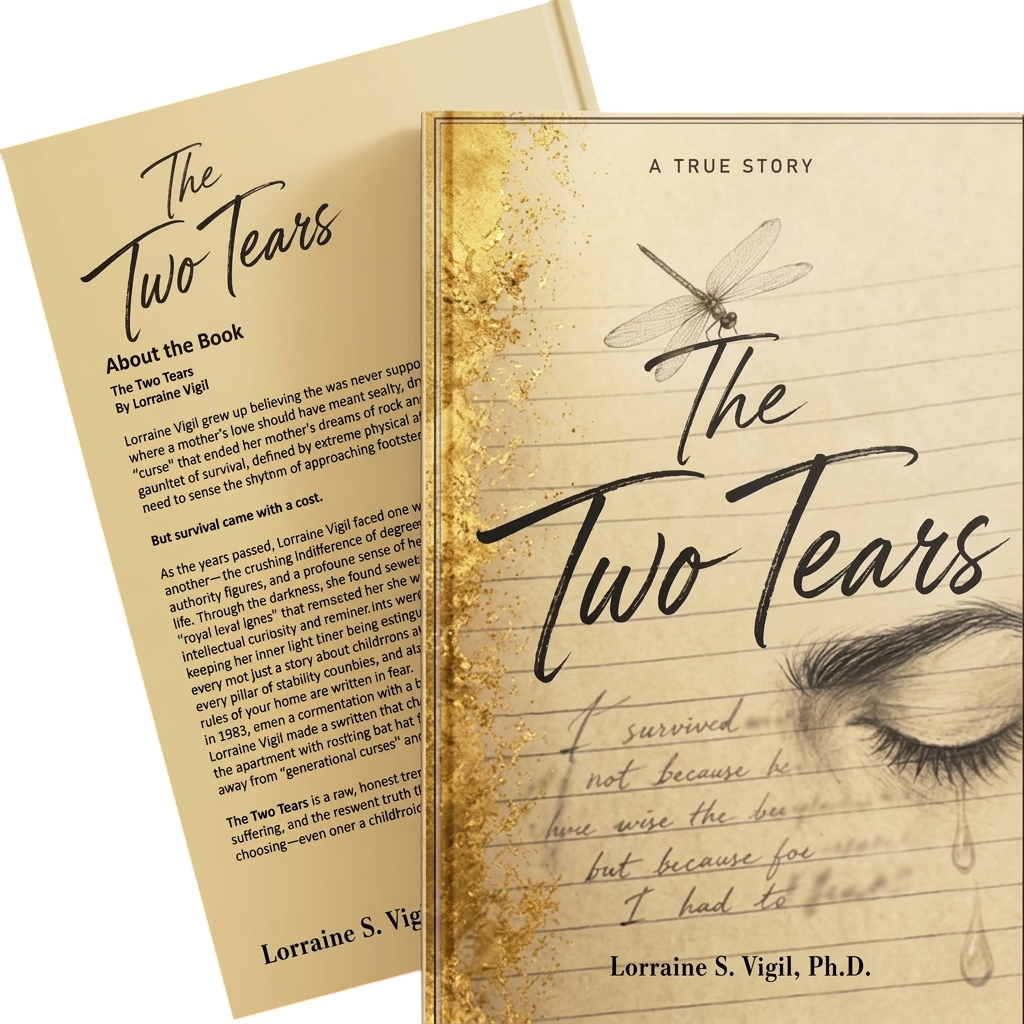
Why read it
The Two Tears explores what happens when childhood lessons about silence, shame, and affection follow someone into adult relationships. Lorraine’s experiences reveal how difficult it can be to recognize your own worth when the people closest to you have repeatedly denied it.
The book also makes room for the details that sustain her: a teacher’s encouragement, a friend who stays, laughter with her grandmother, and the love she feels for her sons. For readers drawn to personal accounts of family trauma, faith, and the effort to break harmful patterns, Lorraine’s story offers an emotionally direct look at what that struggle can involve.